Technology
Dry technology at a glance
Whether it’s wet work clothes, soaked ski clothing or damp safety shoes – our Drying cabinets for work clothes and Shoe dryers ensure fast, gentle drying. It’s not just about high-quality materials and robust construction, but above all about the right drying technology.
This is because different processes are better suited to different applications and requirements. On this page, we present the four most common technologies – clearly laid out, easy to understand and with clear differences.
Contents of this page:
-
How do warm air, condensation, heat pump and electric heating technologies work?
-
What advantages and disadvantages do they have?
-
Which solution suits your needs – for commercial or private use?
Note: While Drying cabinets usually work with warm air, condensation or heat pumps, Warm-air shoe dryers often use warm air or electric heating elements.
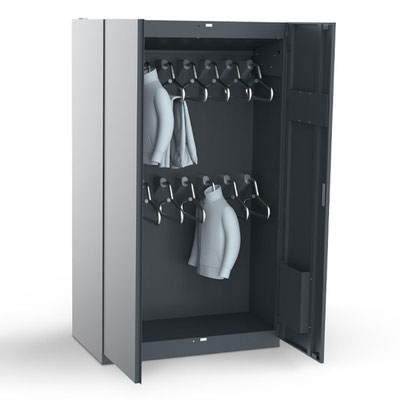
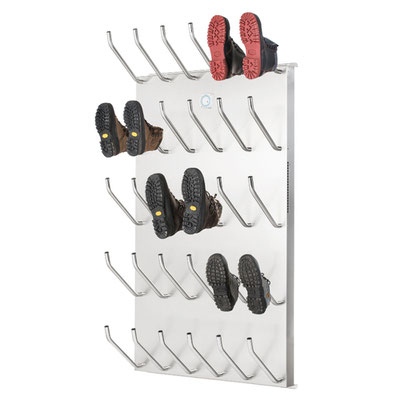
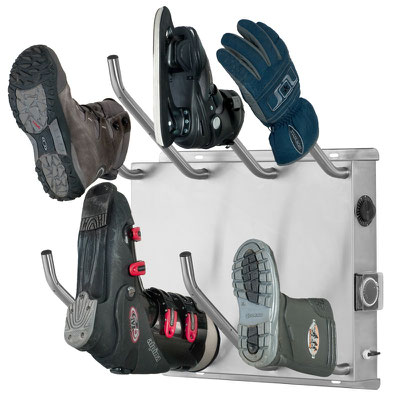
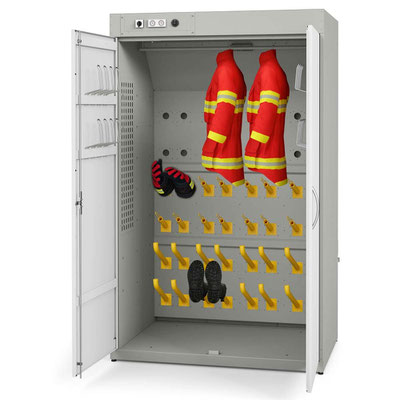
Hot air drying
An integrated heat pump heats the air and efficiently removes moisture from it at the same time.
Advantages:
- Very energy-saving
- Low operating temperatures – gentle on textiles
- Environmentally friendly
Suitable for:
Continuous operation, energy-efficient devices – even at temperatures from 7 °C.
Special feature:
Higher purchase price, but economical in the long term
Condensation drying
How it works:
The humid air is condensed within the system. The condensation water is collected in a container or emptied directly into the waste water system via a hose.
Advantages:
- No release of moisture into the room air
- Up to 50% less energy consumption
- Use from an ambient temperature of 7 °C
Ambient temperature
Suitable for rooms from 15 °C
Special feature
Ideal for enclosed spaces such as ski huts or workshops
Heat pump drying
How it works:
An integrated heat pump heats the air and efficiently removes moisture from it at the same time.
Advantages:
- Very energy-saving
- Low operating temperatures – gentle on textiles
- Environmentally friendly
Suitable for:
Continuous operation, energy-efficient equipment – even at temperatures from 7 °C.
Special feature:
Higher purchase price, but economical in the long term
Electric heating
How it works:
Heating rods or heating elements heat the ambient air or the dry goods directly – usually without active air circulation.
Advantages:
- Compact design
- Few moving parts
- Inexpensive and robust
Suitable for:
Shoe dryer in use at ambient temperatures between 7 °C and 15 °C.
Special feature:
Less air circulation, less efficient than warm air
Comparison table of drying technologies
| Technology | Energy consumption | Room temperature | Air circulation | Location | Special feature |
|---|---|---|---|---|---|
| Warm air | Medium | from 15 °C | High | Workshops, ski rooms, heated indoor rooms | Fast and effective at a good ambient temperature |
| Condensation | Medium to low | from 7 °C | Medium | Basement, closed rooms without exhaust air | No exhaust air connection necessary |
| Heat pump | Very low | from 7 °C | Medium | Energy-efficient or unheated rooms | Very economical in the long term |
| Electric heating | Medium to high | from 7 °C | Low | Compact Shoe dryers, workbenches | Simple and robust, but less efficient |
Frequently asked questions
Which technology is the most energy-efficient?
Heat pump technology consumes by far the least electricity as it efficiently recycles existing heat. Ideal for continuous use and high operating cost savings.
What happens at temperatures below 7 °C?
In unheated rooms below 7 °C, the efficiency of all technologies decreases. Here we recommend either minimal basic heating or specific models with frost protection function.
Which technology is the quietest?
Systems with electric heating or heat pumps are particularly quiet as they work either without a fan (heating elements) or with moderate air circulation.
How often do condensate containers need to be emptied?
This depends on the use – daily in continuous commercial use, often only weekly in private use. Alternatively: choose models with direct water drainage.
Would you like professional advice?
We will be happy to advise you on the phone or by e-mail.
Contact us
For inquiries, quotations or technical support
you can reach us quickly and easily by e-mail: